Lesvos
Lesvos
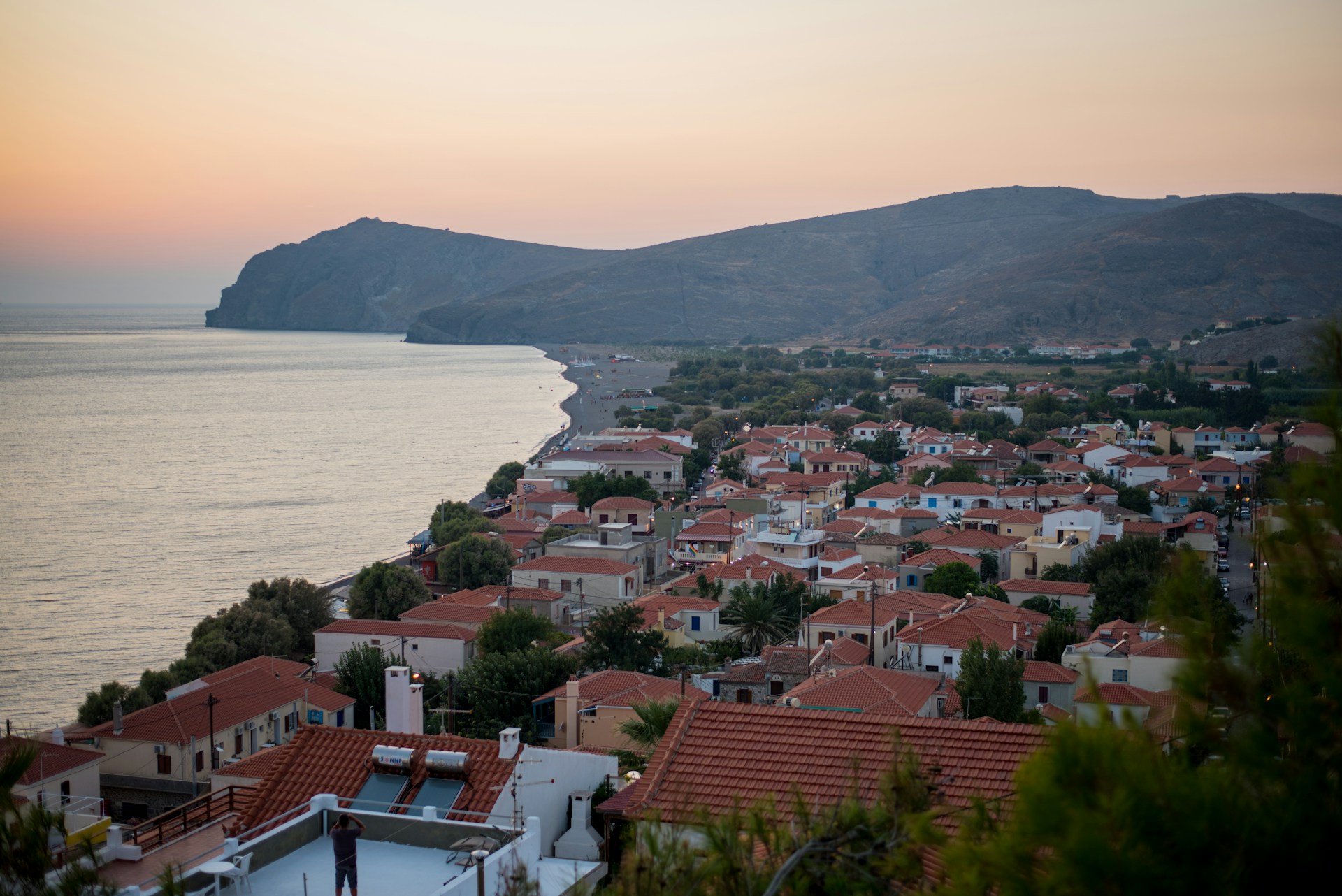
Home of Sappho, Lesvos emerges through the centuries as a limitless muse of the Mediterranean. The third largest Greek island unfolds an impressive variety of landscapes: vast olive groves, dense pine forests, lunar-like scenery, picturesque villages, and enchanting coastlines create a tapestry of natural beauty that captivates visitors. With its rich architectural heritage, significant museums, unique culinary delights, and hospitality that remains genuine and human, Lesvos offers experiences where aesthetics, history, and culture meet in harmony.
How to Get to Lesvos
By Air
Mytilene International Airport, located just 8 km from the city center, serves regular domestic flights from Athens and Thessaloniki. The flight from Athens lasts approximately 60 minutes, providing fast and convenient access to the island. Transportation from the airport to Mytilene city center is easy, making arrivals even more comfortable and quick.
Plan your trip easily and efficiently – contact us to book your flight tickets to Lesvos!
By Ferry
Lesvos is regularly connected by ferry to Piraeus and Thessaloniki, as well as to other islands of the Northern Aegean. Ferry routes from Piraeus operate daily, with travel times ranging around 9 hours depending on intermediate stops.
Book your ferry tickets to Lesvos at Ferrytips!
Mytilene
Mytilene, the capital and main port of Lesvos, is built amphitheatrically around the harbor, combining neoclassical architecture with Venetian elements. At its center stands the impressive Castle of Mytilene, while narrow streets host cafés, traditional restaurants, and small shops with local products. The grand Church of Saint Therapon also stands out, with its iconic dome and an eclectic mix of neoclassical, Gothic, and Baroque elements, inaugurated in 1935.
Plomari
On the southern side of the island, Plomari is famous for its beauty, narrow cobblestone streets, and ouzo production. The village combines the tranquility of a traditional settlement with liveliness and gastronomic delights. Visitors can enjoy walks along the seaside promenade and visit local ouzeri, while the surrounding area offers access to small, secluded beaches with crystal-clear waters.
Molyvos
Molyvos can only be compared to the most beautiful medieval castle towns in the world. The city’s structure and architectural design, along with its Byzantine castle, have remained intact over the centuries. Strolling through the narrow cobblestone streets, one admires the stone-built houses, mansions with colorful shutters, and the central marketplace, all forming a unique scene of history and beauty.
Getting Around
Despite its large size, Lesvos is relatively easy to navigate. The island has a bus network connecting Mytilene with major villages and beaches, while renting a car or motorbike offers greater comfort and freedom to explore. Villages and beaches are connected by good road networks, and more remote bays and beaches are accessible by small boats. Taxis and private transport services are always available for those preferring direct service.
Beaches in Lesvos
Lesvos offers a variety of beaches, from organized sandy shores to quiet coves. Each beach provides a different experience, ideal for families, couples, or lovers of nature and adventure.
Molyvos Beach
Overlooking the picturesque castle and the deep blue waters of the northeastern coast, Molyvos Beach is one of the island’s most popular. It is a large beach with sand and pebbles, shallow waters, and facilities for water sports such as water skiing, parasailing, wakeboarding, and SUP. The area also features cafés and taverns, while the beach offers ideal conditions for swimming and sunbathing.
Agios Isidoros
Near Plomari, Agios Isidoros Beach is one of the largest on Lesvos, with sand, fine pebbles, and clean waters. The organized beach offers sunbeds, umbrellas, taverns, and beach bars, ensuring a comfortable and relaxing day. A complete vacation experience includes a visit to Plomari to learn about the region’s ouzo tradition.
Skala Eresou
On the western side of Lesvos, Skala Eresou combines golden sand with clear waters and maintains the authentic atmosphere of a traditional seaside village. Rocks and small coves offer absolute tranquility, and according to legend, it is the birthplace of the ancient poet Sappho. Here you will find beach bars, facilities for water sports, and seaside taverns, while the sunsets are among the most impressive on the island.
Vatera
The largest beach on Lesvos stretches for 8 km with coarse sand and crystal-clear waters. Part of it is organized with sunbeds and beach bars, while the rest offers peace and seclusion. It is ideal for water sports, sailing, and fishing.
Agios Ermogenis
A magical cove with a small sandy beach, emerald waters, and pine trees reaching down to the sea, located in eastern Lesvos, 20 km south of Mytilene. The whitewashed chapel of Agios Ermogenis above the beach completes the idyllic landscape.
Petra
One of the island’s most beautiful beaches, with golden sand and crystal-clear waters. Ideal for swimming, water sports, diving, and seabed observation, offering breathtaking views of the sunset and the small islets in the bay, such as Glaronisi and Agios Georgios.
Attractions & Activities in Lesvos
Lesvos is an island rich in history and culture, with Byzantine monuments, castles, archaeological sites, traditional villages, and natural landscapes with rare flora and fauna.
Molyvos Castle
At the top of Molyvos stands the imposing Castle of Mithymna, one of the best-preserved castles in the eastern Mediterranean and the second largest and most significant on Lesvos. It was built on the ancient Greek and Byzantine acropolis by the Genoese rulers, the Gattilusi, in the 14th century. Today, the castle hosts cultural events during the summer months and offers panoramic views of the Aegean Sea.
Archaeological Museum of Mytilene
The museum consists of two buildings, the Old and the New, located close to each other. The Old Building displays findings covering the history of Lesvos from the Neolithic period to the Roman era. The New Building, in the Kioski district, includes exhibits such as mosaic floors from Roman villas, statues, and reliefs.
Fossil Forest of Lesvos
The Fossil Forest of Lesvos is a unique natural monument of worldwide recognition, recording the geological history of the Aegean over the last 20 million years. Located in the western part of the island, it is one of the largest fossil forests in the world, along with the one in Arizona, USA. The protected area covers approximately 150,000 acres and includes the settlements of Sigri, Eresos, and Antissa, where a world of colorful plant fossils frozen in time emerges among volcanic rocks. The forest has been declared a Preserved Natural Monument and is part of the UNESCO Global Geoparks Network.
Skala Kallonis
Skala Kallonis is a picturesque fishing village and one of the island’s most popular tourist resorts, famous for Kalloni sardines fished in the eponymous gulf. Nearby are the Kalloni Salt Flats, a unique wetland for birdwatching. Ideal for peaceful walks, photography, and connecting with nature, the area hosts over 250 bird species, including storks, swans, and pink flamingos.
Hiking
With trails crossing forests, olive groves, traditional villages, and the Fossil Forest, Lesvos offers unique opportunities for nature immersion and exploration. Many municipalities on the island have mapped local trail networks, making navigation easy. Notable routes include the Lava Trails, the Plomari–Kato Chorio route, and the Agiasos–Mount Olympus hiking path.
Lesvos Festivals
During the summer, the island comes alive with cultural events, traditional celebrations, and music festivals, highlighting the rich cultural heritage of Lesvos.
.jpg?attachment=false&wm=false)
Ready to book your next ferry travel?
Find the best route at the best price and book your tickets online easily, quickly and safely.