Samos
Samos
Samos, the island of the goddess Hera, combines rich history, mythology, and unparalleled natural beauty. The birthplace of great philosophers such as Pythagoras and Epicurus, as well as the astrophysicist Aristarchus, was an important intellectual center in antiquity. Its lush mountains, dense pine forests, fertile vineyards, and citrus groves, together with beaches of exceptional beauty, offer unforgettable experiences to visitors. From the impressive Heraion and Pythagoreion to the famous sweet Samos wine and charming mountain villages, Samos captivates every traveler, making a holiday on this island a true delight.
How to Get to Samos
By Air
Samos International Airport “Aristarchus of Samos” serves regular flights from Athens and Thessaloniki, while during the tourist season, flights from certain European cities are also available. The flight from Athens takes approximately 50 minutes. The airport is about 15 km from Vathy and only 3 km from Pythagoreio, with easy access by taxi, bus, or rental car.
Plan your trip quickly and easily – contact us to book your flights to Samos!
By Ferry
Samos is connected by ferry to Piraeus, with up to three sailings per week. The journey takes around 9 hours, offering plenty of time to enjoy the sea and the Aegean scenery. The island has two ports, Vathy and Karlovasi, which serve as ideal starting points for exploring Samos.
From here, you can also organize island hopping to Ikaria, Fournoi, Chios, Mytilene, Mykonos, Syros, Lemnos, Kavala, Kos, Rhodes, and Symi, easily combining the Cyclades, Dodecanese, and other North Aegean islands for an unforgettable exploration experience.
Book your ferry tickets to Samos on Ferrytips!
Vathy and Ano Vathy
The island’s capital, Vathy, is the administrative and commercial center of Samos, where history meets modern life. The port dominates the town, with the imposing statue of Pythagoras welcoming visitors, while Pythagoras Square serves as the central meeting point with cafés, restaurants, and shops. The town offers quality tourist facilities and museums, such as the Archaeological Museum and the Museum of Ecclesiastical Art, while cultural centers highlight the area’s rich history.
Ascending to Ano Vathy, the old amphitheatrical district with narrow streets, two-story houses with tiled roofs and skylights, and ornate wooden doors creates a fairy-tale atmosphere. The views of Vathy Bay and the surrounding mountains are stunning, and the stone steps, small squares, and traditional taverns evoke a journey back in time, while still reflecting the vibrancy of modern life.
Villages of Samos
Samos has around 30 villages, each with its own charm and character.
Kokkari, just 10 km from Vathy, is a picturesque seaside village with colorful boats, cafés, and streets perfect for strolling.
Pythagoreio, the birthplace of Pythagoras and former capital of the island, is entirely listed as a UNESCO World Heritage Site. Explore the harbor, cobbled streets, the Archaeological Museum, the Logothetis Tower, the Eupalinian Aqueduct, and, of course, the Heraion, the temple dedicated to Hera.
Poseidonio, on the southeast coast, is ideal for relaxation. Enjoy a drink at a seaside taverna, swim on calm sandy beaches, and watch the sunset from the Church of Saint Nicholas.
Ambelos, 300 m above sea level on Mount Karvouni, features charming streets, traditional houses, tavernas with views, and local wine. Trails from here lead to waterfalls and caves.
Manolates, with stone houses, cobbled streets, ceramic and weaving workshops, and surrounding vineyards, offers an authentic Samos experience. Marked hiking trails lead from here to the Valley of Nightingales.
Vourliotes, at 360 m elevation, offers breathtaking views, vineyards producing the famous Muscat variety, the island’s oldest church, the Monastery of Panagia of Samos, and local products such as figs, cherries, and citron.
Mytilinaios, perched amphitheatrically, combines tradition and entertainment with its central square, cafés, and the Aegean Natural History Museum.
Marathokampos features churches and a village seemingly frozen in time, including Pythagoras’ refuge cave during his exile by Polycrates, as well as the cave of Sarantaskaliotissa.
Getting Around
Samos offers easy access to all villages, attractions, and beaches. Narrow roads and scenic paths are ideal for walking and cycling, while renting a car or motorbike provides greater freedom to explore more remote areas.
Beaches in Samos
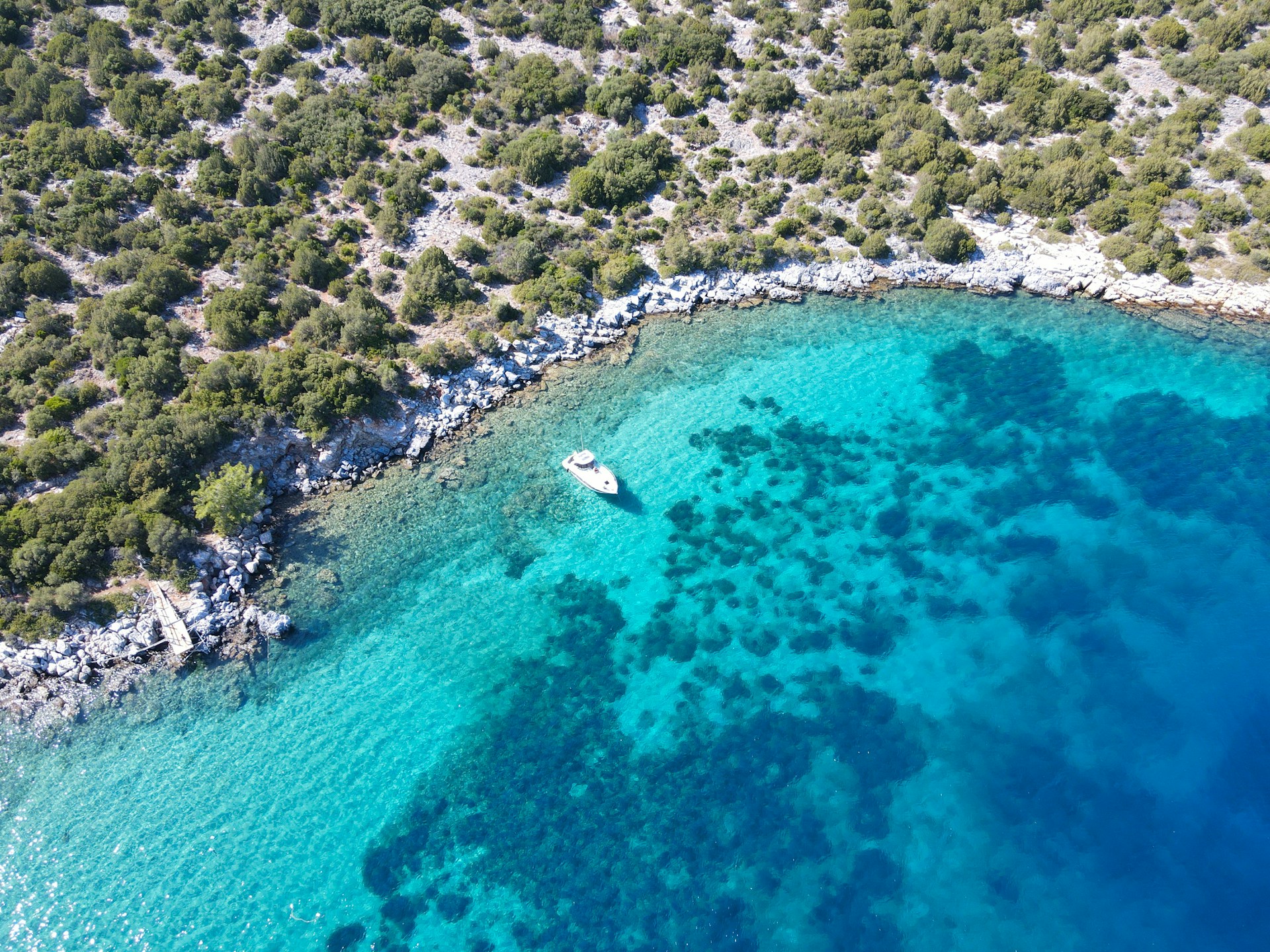
Samos is more than just an island with beaches; it is a destination that combines natural beauty with authenticity. From tranquil coves with shallow turquoise waters to dramatic bays that seem straight out of a postcard, the island offers landscapes that captivate every visitor.
Kerveli
Nestled among pine-covered hills, Kerveli offers a small cove with fine pebbles and calm emerald waters. The beach is partially equipped, and the taverna provides snacks and meals, while the certified diving center offers unique underwater experiences. Ideal for those seeking relaxation and quiet sea activities.
Psili Ammos
The long sandy beach in the Marathokampos area enchants with its shallow, crystal-clear waters and spectacular views of the surrounding pine-clad mountains. One end has rocks, while the expansive sand is perfect for family fun and relaxation.
Potami
The beach of Potami, with its distinctive double-cove formation separated by a small strip of land, is ideal for those who enjoy both the sea and hiking. Its deep, cool blue waters are inviting, and part of the beach is organized with sunbeds, umbrellas, and a beach bar.
Megalo Seitani
A magical and secluded beach with sandy shores, turquoise waters, and pine forest reaching the coast. Access requires a 1.5-hour hike from Potami, rewarding visitors with varied landscapes and picturesque photo spots. Alternatively, it can be reached by caique from Karlovasi.
Tsamadou
One of Samos’ most popular beaches, Tsamadou impresses with large pebbles, crystal-clear blue waters, and pines shading the shore. The beach is organized with sunbeds, umbrellas, tavernas, and a beach bar, accessible via a scenic pine trail.
Attractions & Activities in Samos
Samos is not limited to its coastal charm. Every corner of the island tells a story, from its philosophical heritage and archaeological sites to the unique natural beauty surrounding it.
Heraion
One of the most important sacred sites of antiquity, the Heraion of Samos is a UNESCO World Heritage Site, in use since the 3rd millennium BC. Successive temples dedicated to Hera were built here, culminating in the monumental Ionic dipteral temple of the 6th century BC, described by Herodotus as the largest in Greece. Today, the iconic lone standing column remains from the 105 original columns. Rich findings and votive offerings demonstrate the sanctuary’s influence across Greece and the eastern world. Excavations, ongoing since the early 20th century, have revealed temples, altars, buildings, and the Sacred Way connecting the sanctuary to Pythagoreio.
Archaeological Museum of Samos
Located in the city center, it houses extensive collections from all historical periods, with a special emphasis on the Archaic era. Highlights include the famous Kouros of Heraion, notable for both its technique and impressive height of approximately 5.5 meters.
Archaeological Museum of Pythagoreio
Discover a fascinating collection of archaic columns, portraits of Roman emperors, ceramics from the 9th century BC to the 2nd century AD, and magnificent marble statues dedicated to deities.
Tunnel of Eupalinos
Built in the 6th century BC in Pythagoreio, this underground aqueduct stretches 1,036 meters. Herodotus called it “amphistomon” since it was excavated simultaneously from both sides of Mount Kastro, meeting with remarkable precision. Recognized by UNESCO as a World Heritage Site since 1992, it remains a testament to ancient engineering expertise.
Cave of Pythagoras
After being pursued by Polycrates, the tyrant of Samos, Pythagoras took refuge in this cave, which later served as his home. In fact, there were two caves: one as his residence and the other as a teaching space. Explore the caves and discover the spring from which Pythagoras reportedly drank. Located just 2 km from Marathokampos beach, near the chapels of Saint John and Sarantaskaliotissa, access requires caution.
Tannery Museum
Learn about Samos’ long-standing leatherworking tradition, from antiquity to the early 20th century, at the Tannery Museum in Karlovasi. The museum presents tools, machines, processed leather, and everyday items. At its peak, about 40 tanneries operated in the area.
Samiopoula
A tiny islet just half a mile south of Samos, accessible only by traditional caiques from Pythagoreio, offering an authentic escape experience. Despite its small size, it features crystal-clear waters, small, secluded beaches, and wild natural beauty. Its main beach, Psalida, is known for fine white sand and calm waters. The island is easy to explore, revealing chapels, low vegetation, and a small cove often visited by yachts, with stunning views of Samos from the landing point.
Natural Waterfalls of Metamorfosi
Also known as the Potami Waterfalls, they are in the Potami area near Karlovasi. Named after the 11th-century Church of the Metamorfosi along the path, the trail passes through a dense forest with ancient trees, leading to three successive waterfalls with natural pools. The largest waterfall reaches 5 meters in height, offering a breathtaking sight.
.jpg?attachment=false&wm=false)
Ready to book your next ferry travel?
Find the best route at the best price and book your tickets online easily, quickly and safely.